Get resell clothes online right
Before you list a single garment, you need to set up a workflow that prevents you from losing money on fees, shipping, or returns. Reselling vintage and secondhand clothes is not passive income; it is a logistics business. The difference between a profitable side hustle and a cluttered closet often comes down to your prerequisites.
Choose your primary platform
Don’t try to sell everything on every site at once. Start with one platform that matches your inventory style.
- Poshmark: Best for mid-range brands and social selling. You handle shipping labels, but the community drives traffic.
- Depop: Ideal for vintage, streetwear, and Gen Z trends. The interface favors younger buyers.
- eBay: The best choice for high-value designer items or niche collectibles. Buyers expect detailed condition reports.
- ThredUp: Good for bulk lots of everyday fast fashion. You send a bag, they do the work, but payouts are low.
Pick one to master first. You can expand to others once you understand the photography and listing rhythm.
Set up a dedicated workspace
You need three things: a clean background for photos, a reliable scale, and a thermal label printer.
- Lighting: Natural light near a window is free and effective. Avoid yellow indoor bulbs.
- Scale: A postal scale accurate to 0.1 ounces prevents shipping overcharges or losses.
- Labels: A thermal printer (like a Rollo or Dymo) saves money on ink and speeds up packing.
Understand the tax implications
In the US, the IRS treats reselling as a business. If you sell more than 200 items or earn over $600 in a year, you may need to file Schedule C.
Keep a separate bank account for your reselling income. This makes tracking profit and loss much easier at tax time. You can deduct supplies like poly mailers, tags, and cleaning products. Consult a tax professional to understand your local requirements.
Calculate your break-even point
Before you buy or list, know your margins. Each platform takes a cut.
- eBay: ~13% fee + payment processing.
- Poshmark: 20% commission on sales over $15.
- Depop: 10% fee.
Add shipping costs to this. If an item sells for $30, and fees/shipping take $15, your profit is $15. If you paid $20 for the item, you lost $5. Only list items where the potential profit outweighs the effort.
Build a supply pipeline
You need a consistent source of inventory. Thrift stores, estate sales, and clearance racks are the standard sources.
- Thrift Stores: Visit weekly. New stock usually arrives on specific days.
- Estate Sales: Best for high-quality vintage and designer pieces.
- Online Arbitrage: Check clearance sections of retail sites for undervalued items.
Start small. Buy 5-10 items to test your workflow before committing to a large inventory.
Work through the steps
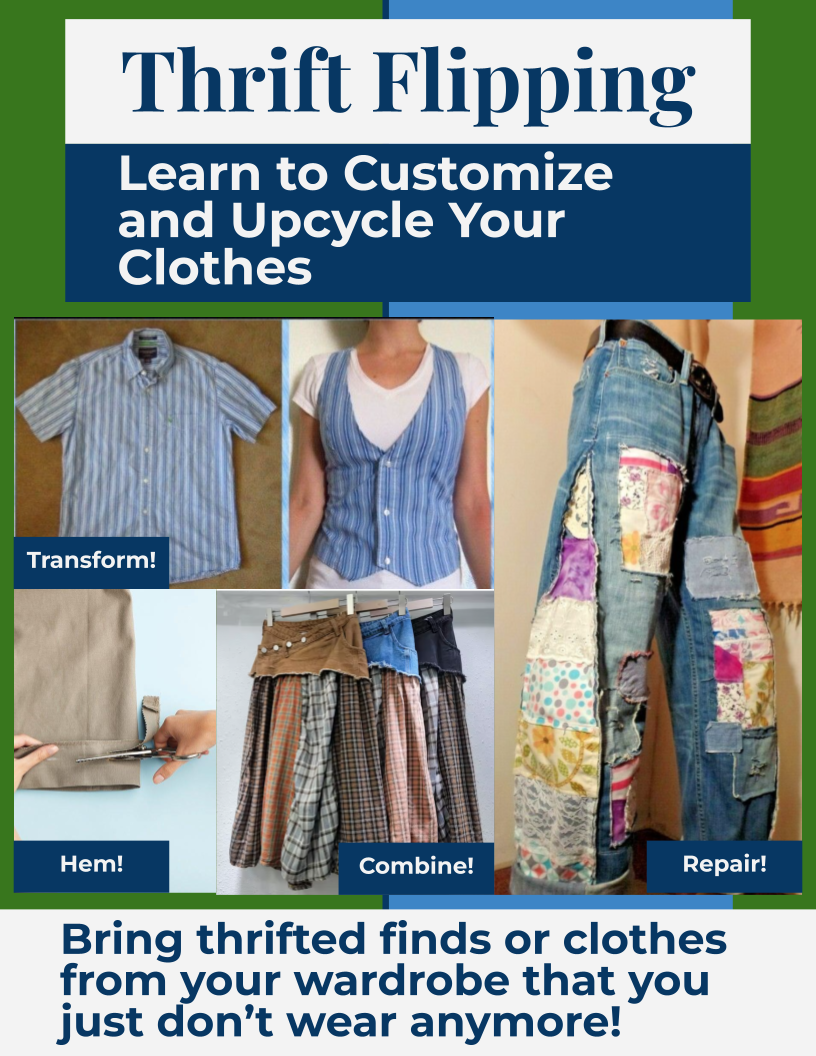
Thrift Flipping works best as a clear sequence: define the constraint, compare the realistic options, test the tradeoff, and choose the path with the fewest hidden costs. That order keeps the advice usable instead of decorative. After each step, pause long enough to check whether the recommendation still fits the reader's actual situation. If it depends on perfect timing, unusual access, or a best-case budget, include a simpler fallback.

Common mistakes that kill resale profit
Thrifting is easy; flipping is a business. The gap between a $2 find and a $50 sale usually comes down to three specific errors: poor condition assessment, lazy photography, and ignoring platform-specific rules. Fixing these mistakes is the difference between moving inventory and watching it sit in a drawer.
Skipping condition checks is the fastest way to get returns or bad reviews. Buyers expect accuracy. If you miss a faint stain, a loose seam, or a broken zipper, the buyer will spot it. Always inspect garments under bright light. Check armpits, hems, and collars. List every flaw explicitly. Transparency builds trust and reduces return rates.
Bad lighting and cluttered backgrounds make even high-end brands look cheap. Most buyers decide within seconds whether to click. Use natural window light or a bright lamp. Shoot on a plain white or neutral background. Include photos of the label, fabric texture, and any flaws. A clear image of the care tag helps buyers verify fabric content.
Ignoring platform fees and shipping costs eats your margin. eBay, Poshmark, and Mercari all take cuts. Factor these into your listing price before you post. Underpricing leads to losses. Overpricing leads to stagnation. Research sold listings for similar items to set a competitive price. Include shipping in the price if it keeps the item attractive, but calculate the actual cost first.
No comments yet. Be the first to share your thoughts!