Set up your reselling toolkit
Thrift store flipping for profit requires a lean operation to maximize ROI. You don't need a warehouse or expensive software; your initial investment should stay under $50. This low barrier to entry allows you to test the market with minimal financial risk while protecting your margins from the start.
The following checklist outlines the five critical tools needed before your first shopping trip. Each item serves a specific function in protecting your margins or speeding up your workflow.
- Smartphone with a camera: Essential for documenting items in good condition and taking photos for listings.
- Portable barcode scanner: Speeds up pricing research compared to manual search apps.
- Measuring tape: Critical for accurate sizing, especially for vintage clothing where tags may be missing.
- Lint roller and stain remover: Allows you to present items in pristine condition, justifying higher sale prices.
- Shipping scale: Ensures you calculate accurate shipping costs to avoid eating into your profit.
Start with a basic smartphone and a measuring tape. As your volume increases, invest in a scanner to reduce time spent on research.
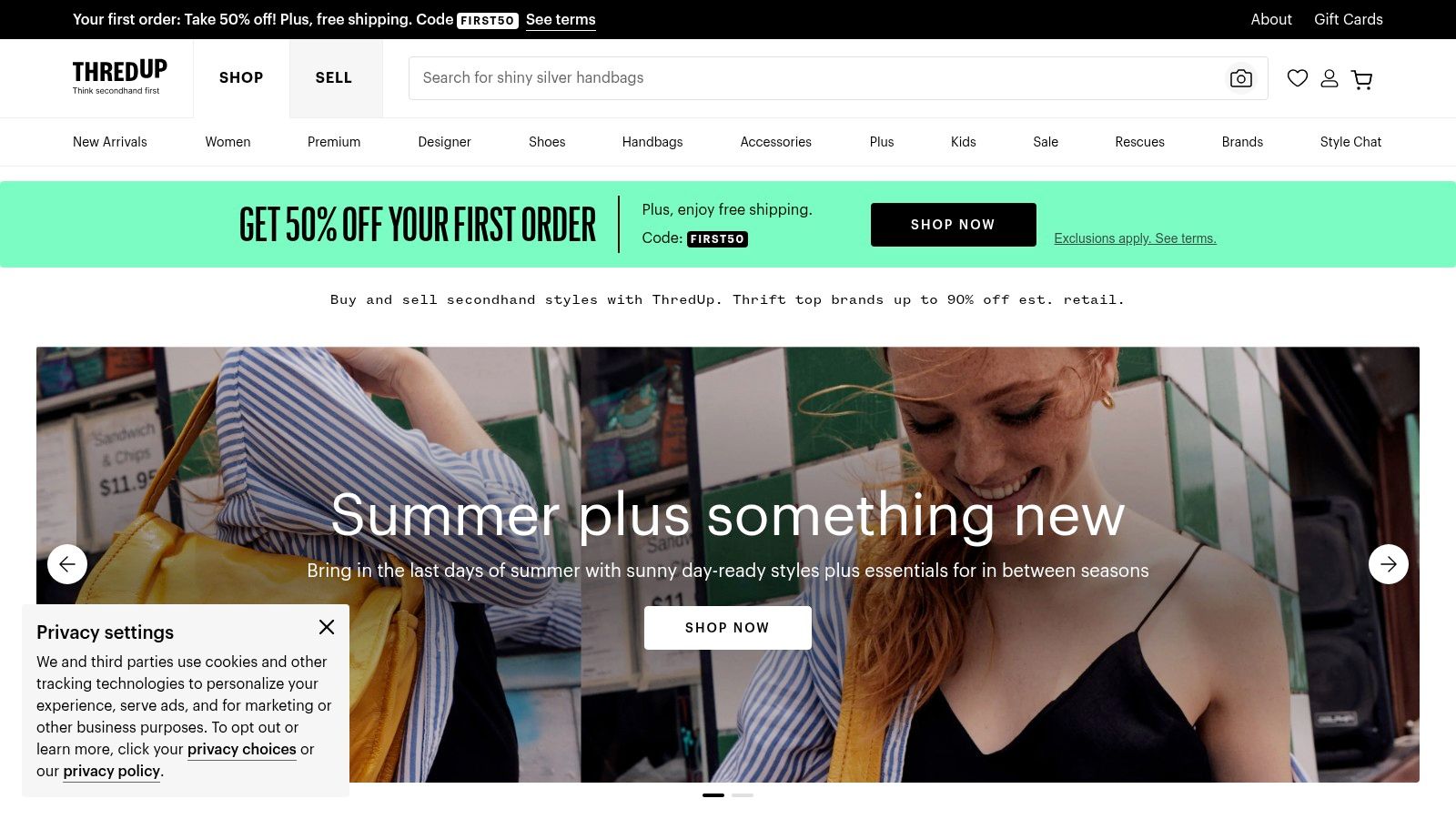
Scan shelves for high-value brands
Scanning a thrift store rack is less about browsing and more about targeted reconnaissance. You are looking for specific markers that signal resale potential: recognized designer labels, vintage band tees, and specific fabric compositions. The goal is to identify items with high liquidity—pieces that sell quickly on platforms like eBay, Poshmark, or Depop—rather than rare artifacts that might sit in inventory for months.
1. Check for recognizable designer labels
Designer clothing often holds its value because buyers search for specific names. Look for tags from brands like Ralph Lauren, Calvin Klein, Levi’s (especially vintage red-line or black tab), and Coach accessories. These items have established market prices, making it easier to estimate your profit margin before you buy. A plain white t-shirt is worth $5; a vintage Ralph Lauren polo with the embroidered pony logo can fetch $30–$60 depending on condition and size.
Pull the item off the rack and locate the main neck tag. Confirm the brand name is legible. Avoid items with faded, torn, or missing tags, as these significantly reduce resale value and buyer trust. If the tag is missing but the logo is embroidered on the chest, verify the logo’s accuracy against known brand standards to avoid counterfeits.
Flip the garment to the interior care label. This is where the true value indicators live. Look for "Made in USA" or "Made in Italy" tags on mid-range brands like Gap or Banana Republic, which often command higher prices than their modern counterparts. Check for natural fibers like 100% cotton, wool, or silk. Synthetic blends like polyester are generally less desirable unless they are specific vintage sportswear or designer pieces known for those materials.
Before adding an item to your cart, perform a quick condition check. Look for stains under the arms, thinning fabric at the elbows, missing buttons, or broken zippers. Even small flaws can deter buyers or require costly repairs that eat into your profit. If you spot a flaw, decide immediately if the brand’s strength outweighs the defect. A hole in a Levi’s jacket might be fixable; a stain on a silk blouse is usually a dealbreaker.
2. Identify vintage band tees and graphic tees
Vintage band t-shirts are among the most profitable items to flip, but they require a keen eye for authenticity. Look for single-stitch hems, which were common before the mid-1990s. Modern reproductions often have double-stitched hems. Also, check the brand of the shirt itself; brands like Hanes, Fruit of the Loom, and Anvil were commonly used for official band merch. A genuine vintage Metallica or Nirvana tee can sell for hundreds of dollars, while a generic graphic tee is worth very little.
3. Look for specific fabric compositions
Fabric content is a quick proxy for quality and resale potential. Natural fibers like wool, cashmere, leather, and silk are always in demand. If you find a wool coat or a silk scarf for under $10, it’s likely a profitable flip. Synthetic fabrics like acrylic or rayon are harder to sell unless they are from a highly sought-after designer. When in doubt, check the care label: if it lists a high percentage of natural fibers, it’s a good candidate for further inspection.
Verify market value before buying
Start by defining what a good Thrift Store Flipping for Profit purchase has to prove before you compare prices. Separate must-have requirements, seller credibility, condition, delivery timing, and return terms from nice extras that can wait.
Keep the first pass narrow. Shortlist a few credible sources, check the evidence behind each listing, and reject options that hide basic details. A cheaper offer is not useful if it leaves the most important risk unanswered.
| Factor | What to check | Why it matters |
|---|---|---|
| Fit | Match the option to the primary use case. | A good deal still fails if it does not fit the job. |
| Condition | Verify age, wear, and service history. | Hidden condition issues erase upfront savings. |
| Cost | Compare purchase price with likely upkeep. | The cheapest option is not always the lowest-cost option. |
Photograph and list items clearly
Clear photography and accurate descriptions are the primary drivers of your sell-through rate. In thrift store flipping for profit, the listing is your only salesperson. If the buyer cannot see the condition or verify the brand, they will scroll past. This section breaks down the exact steps to create listings that convert browsers into buyers, maximizing your return on investment.
Natural light is non-negotiable. Place your items near a large window during the day, avoiding direct sunlight that creates harsh shadows. Use a plain, neutral background like a white wall, a clean floor, or a neutral sheet. This keeps the focus entirely on the garment’s color and texture, reducing the likelihood of buyer returns due to "item not as described" claims.
Take a full-length shot of the item laid flat or on a hanger. Crucially, you must photograph the brand label and the care tag. For high-value items like vintage Levi’s or designer pieces, close-ups of the red tab, button engraving, or specific stitching patterns are essential for verification. Buyers use these details to authenticate items and determine size accuracy.
Transparency protects your profit margin by preventing returns. Zoom in on any stains, holes, pilling, or missing buttons. If an item has a flaw, describe it in the title or the first line of the description. A buyer who knows about a small stain is far more likely to purchase than one who feels deceived after receiving the item.

Your description should be factual and concise. Start with the brand, material, and size. Then, describe the condition honestly. Use specific keywords that buyers search for, such as "vintage," "90s," "cotton," or "oversized." Avoid fluffy language; instead, focus on details like "slight fading on the sleeves" or "new with tags." This helps your listing appear in relevant search results and builds trust with the buyer.

Research completed sales on your platform to determine a competitive price. Look for items in similar condition and size. If you want a quick flip, price 10-15% below the average sold price. If you are willing to wait for the best offer, price at the median. Remember to factor in platform fees and shipping costs when calculating your net profit.
By following these steps, you transform a simple thrift store find into a professional, trustworthy listing. This approach minimizes friction for the buyer and maximizes your chances of a successful sale.
Package and ship orders efficiently
Shipping is where your profit margin meets the customer experience. A sloppy package leads to returns, while a professional one builds the reputation needed to sell higher-priced lots. Treat packaging as a fixed cost in your ROI calculation, not an afterthought. Your goal is to minimize dimensional weight charges while ensuring the item arrives in pristine condition.

Use a digital scale to get the exact weight before buying shipping supplies. Dimensional weight pricing can double your costs if you use a box that is too large. Measure the item’s dimensions while it is still in its final packaging to ensure you select the smallest viable mailer or box.
For lightweight items like t-shirts or underwear, use poly mailers which are significantly cheaper than boxes. For structured items like jackets or denim, use rigid boxes to prevent creasing. Compare rates between USPS, UPS, and FedEx; often, a flat-rate envelope is the most profitable choice for items under 16 ounces.
Wrap fragile items or those prone to wrinkling in acid-free tissue paper. Place the item in a clear poly bag before putting it in the outer mailer to protect against moisture. Seal all edges with strong packing tape. A secure package reduces the likelihood of damage claims, which directly erode your net profit.
Purchase shipping labels through your selling platform or a third-party service like Pirate Ship to access commercial pricing. Print the label on standard paper or a thermal printer and attach it securely over the entire address area. Ensure the tracking number is visible and scannable to avoid delivery delays.
Shipping isn't just logistics; it's part of the product. When a buyer receives a neatly packaged item with clear tracking, they are more likely to leave positive feedback. This feedback drives future sales, creating a compounding effect on your flipping income. Always prioritize speed and reliability over saving a few cents on postage.
Common mistakes that kill profits
The easiest mistake with Thrift Store Flipping for Profit is letting one attractive listing reset your standards. Compare total cost, seller history, return policy, condition, availability, and long-term upkeep before treating a discount as a win.
Do not move forward when the seller is vague about what is included, how delivery works, or what happens if the item arrives in worse condition than promised. Those gaps are usually where the real cost appears.
The simplest way to use this section is to verify the seller, compare the total cost, and resolve the biggest risk before you commit.
No comments yet. Be the first to share your thoughts!