Thirty brands to watch at the thrift store
I've found that the best vintage flips aren't always the obvious luxury names. While a 1970s Pucci dress is a clear win, a 1990s version of the same brand often sits on shelves because the quality dropped. Success in thriting comes down to spotting these era-specific shifts in fabric and construction before you even look at the price tag.
Based on recent market data, and looking ahead to 2026, I've compiled a list of 30 brands to prioritize during your thrift store expeditions. I'm categorizing them loosely by potential resale value, understanding that condition and rarity play a huge role. 'Entry-level' brands consistently sell, but margins may be smaller. 'Mid-range' requires a bit more knowledge, but offers better profitability. 'High-end' demands expertise, but the rewards can be substantial.
Here’s a breakdown. Entry-level includes brands like Levi’s (especially 501s), Lee, Wrangler, Eddie Bauer, and Pendleton. These are reliable sellers, particularly if you can find pieces in good condition and desirable washes or patterns. Mid-range includes brands like St. John, Talbots (vintage cashmere), Laura Ashley, and early J.Crew. These require a keener eye for quality and design details. High-end brands include Pucci, Ossie Clark, Halston, YSL (vintage Le Smoking suits are gold), and Hermès (scarves and accessories).
- Levi’s 501s with selvedge denim or 'Big E' red tags.
- Lee & Wrangler: Western wear and vintage denim.
- Eddie Bauer: Durable outerwear and sportswear.
- Pendleton wool shirts, specifically the 'Board Shirt' with flat hems.
- St. John: Knitwear and separates – known for quality and fit.
- Talbots: Vintage cashmere sweaters and classic silhouettes.
- Laura Ashley: Floral dresses and romantic blouses.
- J.Crew (early): Pre-2000 J.Crew often features better fabrics and construction.
- Pucci: Bold prints and luxurious fabrics – highly sought after.
- Ossie Clark: British designer known for flowing dresses and psychedelic prints.
- Halston: Minimalist designs and luxurious fabrics – 1970s pieces are particularly valuable.
- YSL: Vintage Le Smoking suits and accessories.
- Hermès: Scarves, belts, and leather goods.
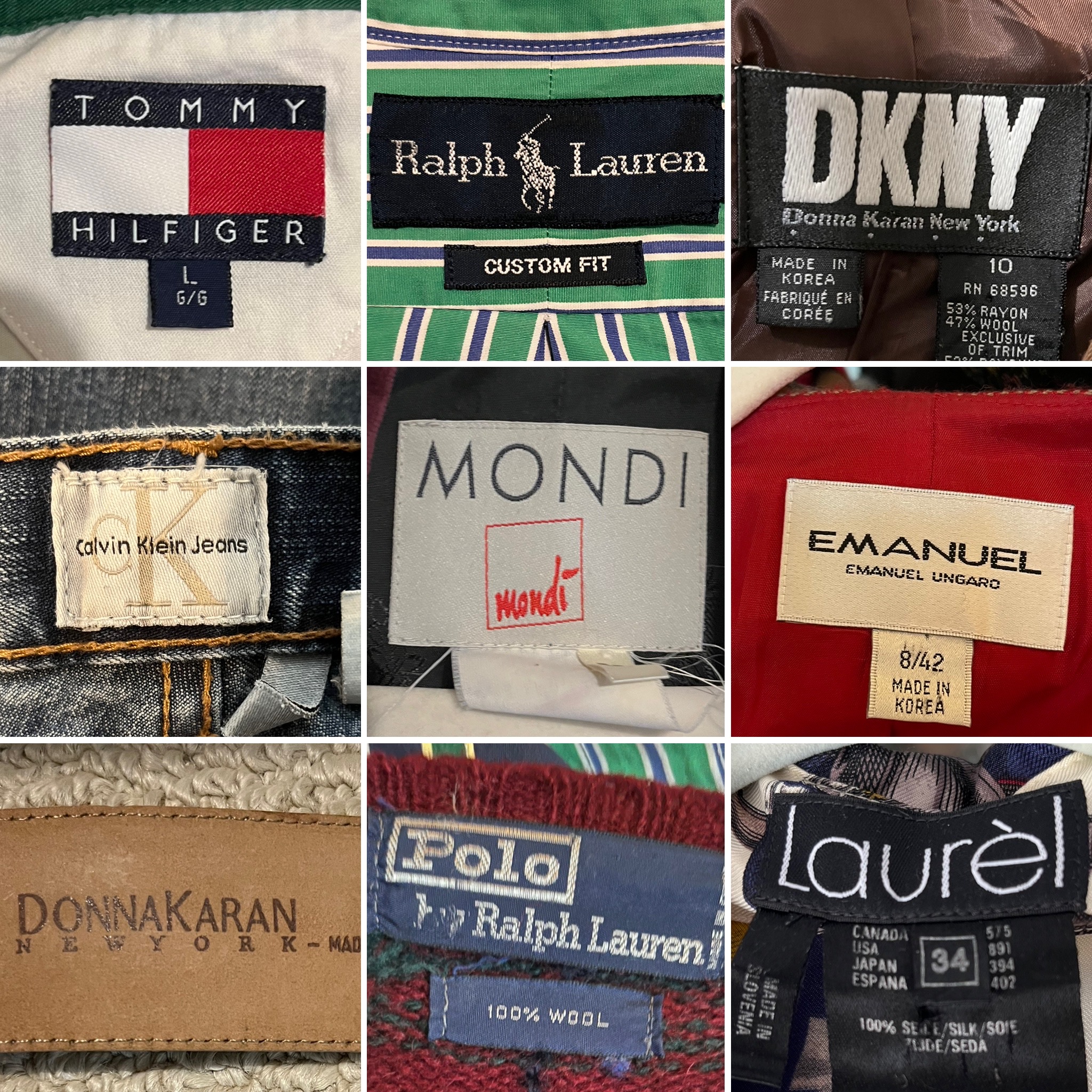
How to date clothes using labels
Successfully reselling vintage clothing hinges on accurately dating pieces. Knowing the era helps establish authenticity and justify pricing. While a precise date can be elusive, several clues can guide you. Examining the label is the first step, but labels have changed dramatically over time. Union tags, often found in American-made garments, can provide valuable information about the manufacturing date.
Look for the union label and the number associated with it. These numbers correspond to specific years and locations. Fabric content is also a crucial indicator. For example, the widespread use of rayon in the 1930s and 40s, or the introduction of polyester in the 1970s, can help narrow down the timeframe. Construction details—zipper types, seam finishes, and button materials—also offer clues. Metal zippers became common in the 1930s, while plastic zippers gained popularity in the 1960s.
Dating clothing isn't an exact science. There are overlaps and variations. It takes practice and research to become proficient. Don't be afraid to consult online resources and vintage fashion guides. I’ve found that focusing on learning the hallmarks of specific decades – the silhouettes, the fabrics, the details – is more effective than trying to memorize every label variation.
Spotting Reproductions: Avoiding Fakes
The market is flooded with reproductions, particularly of popular brands like Levi’s and Pendleton. These fakes can be difficult to spot, but careful examination can reveal their flaws. One of the most telltale signs is fabric quality. Reproductions often use cheaper, thinner materials that lack the durability and feel of the originals. Stitching is another key indicator; authentic vintage pieces typically have more meticulous and consistent stitching.
Pay close attention to zipper types. Reproductions may use modern zippers that weren’t available during the garment’s supposed era. Label inaccuracies are also a red flag. Check for misspellings, incorrect fonts, or poorly attached labels. For Levi's, look for details like the arcuate stitching on the back pockets – the shape and spacing should be accurate to the era. The red tab should also be correctly positioned and have the appropriate font.
With Pendleton, examine the selvedge edge of the fabric. Authentic Pendleton fabrics have a clean, tightly woven selvedge. Reproductions often have a frayed or uneven edge. Remember, a low price should always raise suspicion. If a deal seems too good to be true, it probably is. Always compare the item to known authentic examples before making a purchase.
The specific details that make Levi's valuable
Levi’s consistently ranks among the most valuable vintage clothing brands, and understanding the nuances of different models and eras is crucial for successful resale. The 501s are the most iconic and sought-after, but even within the 501 family, there’s significant variation in value. Early 501s (pre-1960s) with a single back pocket are particularly desirable.
The red tab on the back pocket is a key identifier. Variations in the red tab – the font, the size, and the placement – can indicate the era of production. "Made in USA’ Levi"s generally command higher prices than those made in other countries, especially those from the earlier decades. Pay attention to the copper rivets – their shape and finish can also help date the garment.
Different cuts, like the 606 (slim fit) and 646 (bell bottoms), also have their own collectors. Focusing on specific washes, like dark indigo or faded vintage washes, can also increase value. A well-preserved pair of vintage Levi’s 501s can easily fetch over $200, and rare or particularly well-preserved examples can sell for much more.
Beyond Denim: Unexpected High-Value Finds
While denim dominates the vintage resale market, several other brands offer significant potential. Pucci, with its vibrant prints and luxurious silk fabrics, consistently fetches high prices. Original 1970s Pucci dresses can sell for hundreds of dollars. Ossie Clark, a British designer known for his flowing dresses and psychedelic prints, is another brand to watch. His pieces are highly sought after by collectors.
Early sportswear brands, like Catalina and Jantzen, are also gaining popularity. Vintage swimsuits and beach cover-ups from these brands can be surprisingly valuable. Additionally, look for pieces from designers like Bill Blass and Geoffrey Beene, who produced high-quality, classic designs. These brands may not have the same name recognition as Levi’s or Pucci, but they can offer excellent profit margins.
Don’t overlook brands like St. John for their impeccably tailored knitwear. A well-preserved St. John suit can easily resell for a substantial profit. The key is to research and understand the unique appeal of each brand and to be able to identify authentic vintage pieces.
Valuable Vintage Brands
- Pendleton - Known for their high-quality wool blankets and garments, particularly those with Native American-inspired designs. Pieces from the 1940s-1970s, especially virgin wool shirts and jackets in good condition, command strong prices. Look for made-in-USA tags and vibrant patterns.
- Eddie Bauer - Originally focused on outdoor apparel, Eddie Bauer from the 1960s-1980s is highly collectible. Down-filled jackets, particularly those with the older 'First Edition' labels, and well-maintained leather goods are desirable. Focus on items showing durable construction.
- Panhandle Slim - A Western wear brand popular from the 1960s through the 1990s. Pieces featuring elaborate embroidery, pearl snaps, and unique color combinations are particularly sought after. Look for rodeo-style shirts and jackets.
- Sears (Roebuck & Co.) - Private Label - While Sears itself isn't a 'brand' in the designer sense, their private label clothing, especially from the 1950s-1970s, is gaining traction. Look for well-made, durable workwear, Hawaiian shirts, and mid-century modern inspired dresses. Focus on unusual patterns or materials.
- Lee (101-J Model) - Lee jeans, specifically the 101-J model from the 1960s-1970s, are highly coveted by denim collectors. Look for the 'lazy S' stitch and a paper label. Condition is crucial; unwashed or lightly washed pairs are most valuable.
- Sportmaster - A workwear brand from the mid-20th century, Sportmaster garments, particularly their jackets and overalls, are known for their rugged construction. Look for pieces with unique details like triple stitching and cat eye buttons. Items in good, wearable condition are key.
- Jantzen - Originally a swimwear company, Jantzen expanded into casual clothing in the 1950s and 60s. Vintage Jantzen dresses, shirts, and shorts with their distinctive nautical or tropical prints are becoming increasingly popular. Well-preserved prints and vibrant colors are desirable.
Condition is King: Grading & Repair
A stain on a white 1980s Armani jacket can drop the price from $200 to $20 instantly. I grade everything strictly: if there's a pinhole or a faint yellowing under the arms, I list it. Buyers will forgive a flaw if you're honest, but they'll return a 'perfect' item the second they find a loose thread.
Simple repairs can significantly increase the value of an item. Learning basic sewing techniques – replacing buttons, mending small holes, and repairing seams – can be a worthwhile investment. However, avoid making extensive alterations, as this can detract from the garment’s originality. A small, well-executed repair is always preferable to a poorly done alteration.
Transparency is crucial. Buyers appreciate honesty and are more likely to purchase from a seller who accurately represents the condition of their items. Accurate descriptions and clear photos are essential for building trust and maximizing your resale potential.
No comments yet. Be the first to share your thoughts!